



THE ISLAND OF HOKKAIDO
Walking in a winter wonderland.
Hokkaido, Japan's northernmost island, is a land of striking contrasts — national parks, volcanic mountains, hot springs and pristine lakes shaped by the rhythm of the seasons.
In Sapporo, the prefecture's capital, winter brings dazzling snow festivals and a warm welcome in cozy izakayas. From here, trains depart in all directions to all corners of the island.
Further south, Hakodate blends old-world charm and scenic beauty, with its historic port and panoramic views from Mount Hakodate. Connected to Aomori by the Seikan Tunnel, the city stands as the gateway between Hokkaido island and Japan's mainland. Nature WildlifeSapporo is connected by the Limited Express trains operated by JR Hokkaido.
Train routes to Sapporo
For more information about travelling by train, please read our Train Guide in Japan.
Hakodate is connected by the Hokkaido Shinkansen and the Limited Express trains operated by JR Hokkaido.
Train routes to Hakodate
For more information about travelling by train, please read our Train Guide in Japan.
THE TOKAIDO ROUTE
Connecting the past with the present.
The Tokaido route was the most important road during the Edo period, connecting Tokyo with Kyoto and frequented by travelers, merchants, and samurai.
The route commences in the the Nihonbashi bridge in Tokyo, originally known as Edo.
The ancient road can still be experienced in places like Hakone, where preserved post stations, hot springs, and scenic mountain passes recall the journeys of centuries past.
The route continues to Nagoya, where visitors can admire its iconic castle and heritage. Finally, the travelers arrive in Kyoto, the imperial capital where the road reached its end.
History CultureTokyo is connected by the Tokaido Shinkansen operated by JR Central and the Limited Express trains operated by JR East and Odakyu Railway.
Train routes to Tokyo
For more information about travelling by train, please read our Train Guide in Japan.
Hakone is connected by the Tokaido Shinkansen operated by JR Central and the Limited Express trains operated by JR East and Odakyu Railway via Odawara.
Train routes to Hakone
For more information about travelling by train, please read our Train Guide in Japan.
Nagoya is connected by the Tokaido Shinkansen operated by JR Central.
Train routes to Nagoya
For more information about travelling by train, please read our Train Guide in Japan.
Kyoto is connected by the Tokaido Shinkansen operated by JR Central.
Train routes to Kyoto
For more information about travelling by train, please read our Train Guide in Japan.
THE CENTRAL ALPS
Trekking through valleys and mountain ranges.
Journey into the Central Alps and uncover a region where nature and charm come together in perfect harmony.
Kamikochi, a highland valley nestled deep in the Alps ideal for hiking, photography, or simply breathing the fresh mountain air.
Takayama, a beautifully preserved mountain town known for its Edo-period streets, artisan culture and vibrant morning markets.
Shirakawago, a UNESCO World Heritage Site, where the unique gassho-zukuri farmhouses stand against a backdrop of forested hills and rice fields.
Nature AdventureKamikochi is connected by buses operated by Alpico Kotsu Bus.
Bus routes to Kamikochi
For more information about travelling by bus, please read our Bus Guide in Japan.
Takayama is connected by the Limited Express trains operated by JR Central.
Train routes to Takayama
Takayama is also connected by buses operated by Alpico Kotsu Bus, Gifu Bus, Hokutetsu Bus, Iruka Kotsu Bus, Kaetsunou Bus, Kintetsu Bus, Meitetsu Bus and Nohi Bus.
Bus routes to Takayama
For more information about travelling by bus and by train, please read our Bus Guide in Japan and our Train Guide in Japan.
Shirakawago is connected by buses operated by Gifu Bus, Hokutetsu Bus, Iruka Kotsu Bus, Kaetsunou Bus, Meitetsu Bus and Nohi Bus.
Bus routes to Shirakawago
For more information about travelling by bus, please read our Bus Guide in Japan.
THE HOKURIKU ROUTE
Enjoy scenic landscapes and cultural heritage.
The Hokuriku region, stretching along the Sea of Japan and into the Central Alps, is a destination where tradition, culture, and timeless beauty converge.
Matsumoto enchants visitors with its iconic black castle and arts scene, while nearby in Nagano, the famous Jigokudani Snow Monkey Park offers the rare sight of wild monkeys bathing in natural hot springs.
Further to the west, Kanazawa blends charm and elegance with its well-preserved samurai and geisha districts, its renowned Kenrokuen Garden, and a rich heritage of crafts.
Nature HistoryMatsumoto is connected by the Limited Express trains operated by JR East.
Train routes to Matsumoto
For more information about travelling by train, please read our Train Guide in Japan.
Nagano is connected by the Hokuriku Shinkansen and the Limited Express trains operated by JR East.
Train routes to Nagano
For more information about travelling by train, please read our Train Guide in Japan.
Kanazawa is connected by the Hokuriku Shinkansen operated by JR East and JR West.
Train routes to Kanazawa
For more information about travelling by train, please read our Train Guide in Japan.
THE KII PENINSULA
A journey into the soul of Japan.
The Kii Peninsula is a region known for its spiritual significance. Travelers often use the city of Osaka as the main gateway.
In Nara visitors can explore ancient temples and cultural treasures, while Yoshino enchants each spring with its legendary cherry blossoms.
High in the mountains, Koyasan offers a spiritual retreat at the heart of Buddhism.
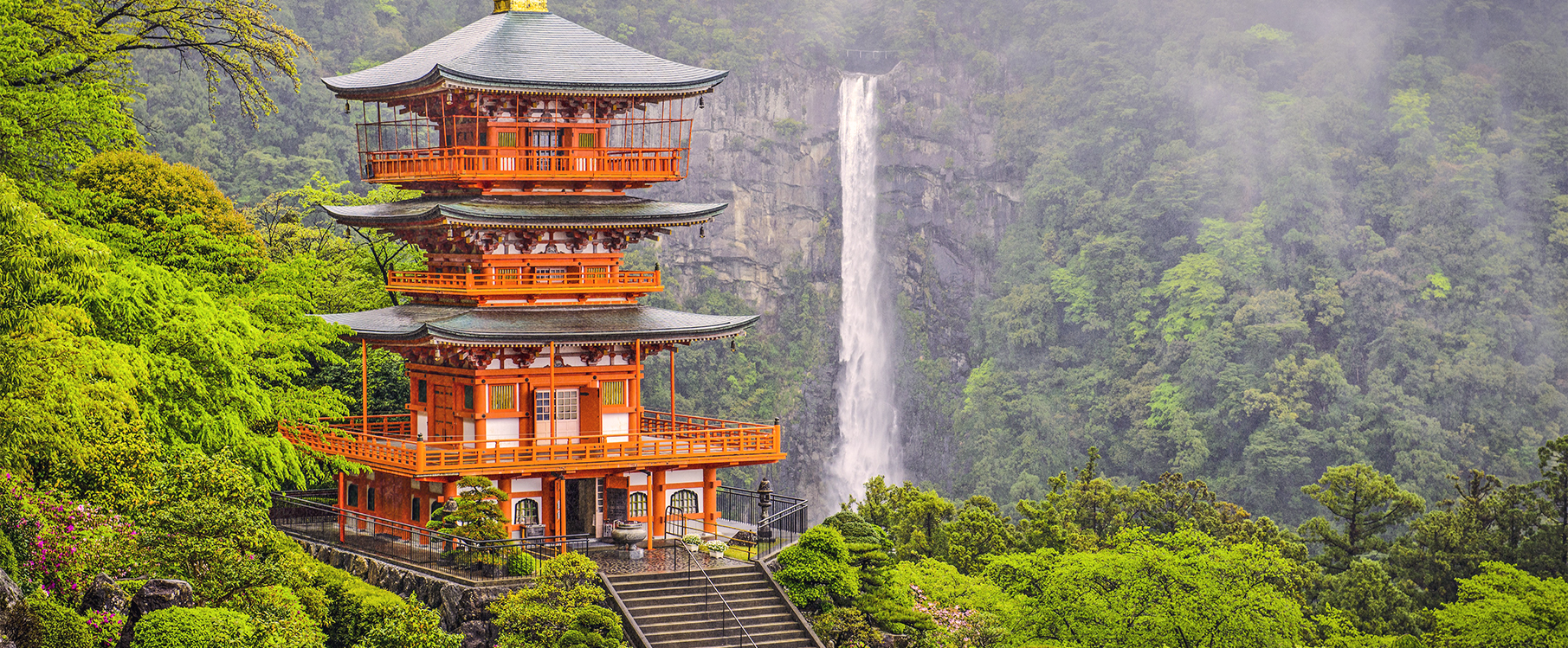
Along the southern coast, the sacred Kumano Kodo pilgrimage trails —accessible from Shingu and Kii-Katsuura— invite travelers to walk paths leading to the revered Kumano Sanzan shrines.
Nature CultureOsaka is connected by the Limited Express trains operated by JR West.
Train routes to Osaka
For more information about travelling by train, please read our Train Guide in Japan.
Nara is connected by the Limited Express trains operated by JR West.
Train routes to Nara
For more information about travelling by train, please read our Train Guide in Japan.
Koya is connected by the Limited Express, Express and Local trains operated by Nankai Railway.
Train routes to Koya
For more information about travelling by train, please read our Train Guide in Japan.
Shingu and Kii-Katsuura are connected by the Limited Express trains operated by JR West.
Train routes to Shingu and Kii-Katsuura
For more information about travelling by train, please read our Train Guide in Japan.
THE SANYO ROUTE
Explore castles and coastal sites.
Stretching along the Seto Inland Sea, the Sanyo region is rich in history and culture.
Himeji dazzles with its White Heron Castle, while Okayama offers a stark contrast with its Black Crow Castle.
Nearby, Kurashiki enchants with its merchant quarter and picturesque canals.
Off the coast of Hiroshima, Miyajima is famous for the Itsukushima Shrine and its floating torii gate, a symbol of Japan's coastal beauty.
Further to the west, Iwakuni captivates visitors with the graceful wooden arches of its Kintai Bridge over the Nishiki River.
Coast HistoryHimeji is connected by the Sanyo Shinkansen operated by JR West.
Train routes to Himeji
For more information about travelling by train, please read our Train Guide in Japan.
Okayama is connected by the Sanyo Shinkansen operated by JR West.
Train routes to Okayama
For more information about travelling by train, please read our Train Guide in Japan.
Kurashiki is connected by the Sanyo Shinkansen operated by JR West.
Train routes to Kurashiki
For more information about travelling by train, please read our Train Guide in Japan.
Miyajima is connected by the Sanyo Shinkansen operated by JR West via Hiroshima.
Train routes to Miyajima
For more information about travelling by train, please read our Train Guide in Japan.
Iwakuni is connected by the Sanyo Shinkansen operated by JR West.
Train routes to Iwakuni
For more information about travelling by train, please read our Train Guide in Japan.